If you spend six or more hours a day typing, the keyboard under your hands is one of the few pieces of gear you actually touch the entire workday. Yet most people inherit whatever came bundled with their PC or whatever the office IT cart handed out. The real question for office work is not which type wins a spec-sheet contest. It is whether the difference between mechanical and membrane is large enough to justify spending more, typing louder, and learning a slightly different feel.
The short version: the technologies are genuinely different, and for some people the difference is meaningful. But the gap is smaller than keyboard enthusiasts make it sound, and the right answer depends heavily on your office, your budget, and how sensitive you are to feel. Here is the honest breakdown so you can decide without the marketing noise.
How Each Technology Actually Works#
A membrane keyboard, which includes nearly every cheap keyboard and most laptop-adjacent designs, registers a keystroke using a rubber dome. Under each key sits a small flexible dome that collapses when you press, pushing a conductive layer down to complete a circuit on a printed membrane sheet. One continuous sheet typically serves the whole board, which is why these keyboards are cheap to manufacture and thin.
A mechanical keyboard puts a discrete physical switch under every single key. Each switch has a spring, a moving stem, and metal contacts that close on their own. Because the switch is an independent mechanism, it registers the press partway down rather than only at the bottom, and it can be tuned for a specific feel. Common switch families break into three behaviors: linear (smooth all the way down, such as Cherry MX Red), tactile (a noticeable bump when the key registers, such as Cherry MX Brown), and clicky (a bump plus an audible click, such as Cherry MX Blue). Most office-friendly builds use linear or tactile switches and skip the clicky ones.
That structural difference, one shared rubber sheet versus dozens of individual mechanisms, is the root of every other difference below.
Typing Feel and Accuracy#
This is where mechanical keyboards earn most of their reputation, and the reputation is mostly deserved. Because a mechanical switch registers partway through the press, often around 2mm of travel, you do not have to bottom out the key to get the letter. Once your fingers learn that actuation point, you can type with a lighter, more consistent touch. The tactile bump on a switch like a Brown gives a clear physical signal that the press counted, which some people find reduces missed or doubled keystrokes during fast typing.
Membrane keyboards register only when the dome fully collapses against the bottom, so you are effectively bottoming out on every keystroke. Good membrane boards still feel fine, and a quality one beats a worn-out mechanical, but cheap domes tend to feel mushy and uneven, and the feel degrades as the rubber ages.
Be honest with yourself about whether you will notice. Plenty of fast, accurate typists are perfectly happy on membrane. The accuracy gain from mechanical is real but modest, and it mostly shows up at higher typing speeds. If you want to compare specific switch feels before committing, our keyboard reviews note the switch type and typing character for each board we review.
Noise: The Office Consideration#
This is the factor most people underestimate, and it is the one most likely to annoy a coworker. A quiet membrane keyboard runs in the rough neighborhood of 40 to 50 decibels, close to a soft background hum. Linear mechanical switches land a little higher, and clicky switches like Blues can push past 60 decibels, which is conversation-level volume and genuinely disruptive in a shared room or on a video call with an open mic.
If you work in an open-plan office or take a lot of calls, this matters more than feel. The good news is that mechanical does not have to mean loud. Choosing linear or tactile switches over clicky, adding O-ring dampeners under the keycaps, or buying a board marketed as silent (often using switches with built-in dampening) brings the volume down close to membrane levels. Just know that the stock clicky mechanical board you tried at a friend's desk is the loud end of the spectrum, not the norm for office use.
If you want mechanical feel in a shared room, a low-profile board with quiet tactile switches is a sensible middle ground.
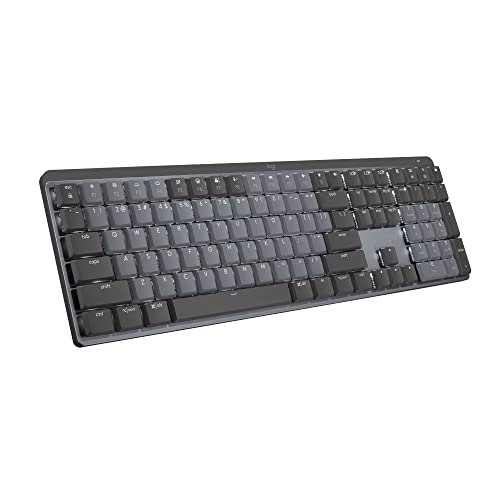
Logitech MX Mechanical Wireless Keyboard
A full-size, low-profile mechanical keyboard with Tactile Quiet switches, smart backlighting, and 3-device pairing — mechanical feel without the office-annoying clatter.
Durability and Cost Over Time#
This is the clearest win for mechanical, and it is measurable. Individual mechanical switches are commonly rated for 50 million keystrokes, with many modern switches rated for 80 to 100 million. Rubber dome membranes are typically rated around 5 to 10 million presses per key before the dome softens and the feel goes mushy. That is roughly a five-to-tenfold difference in rated lifespan.
What that means in practice: a decent mechanical keyboard can realistically last five to ten years of heavy daily typing, and if a single switch fails on a hot-swappable board you can replace just that switch cheaply. A membrane board is essentially disposable, when it wears out you replace the whole unit.
The cost math is less lopsided than it looks, though. A serviceable membrane keyboard is about as inexpensive as desk gear gets, while a solid office mechanical board typically costs several times as much. So you are paying more upfront for a keyboard that lasts roughly that much longer and feels better while it does. If you keep gear for years, mechanical pays for itself. If you replace keyboards on a whim or your employer buys them in bulk, the upfront cost is harder to justify on durability alone.
Who Should Pick Which#
Pick mechanical if you type for a living, you keep your gear for years, you care about typing feel, or you want a board you can repair and customize. Lean toward linear or tactile switches and consider a silent or dampened variant if you share space. If you want help narrowing the field, our guide to the best mechanical keyboards breaks down switch types and office-appropriate picks by budget.
A tenkeyless wireless board with tactile brown switches is a typical example of an office-friendly mechanical setup.

Keychron K8 Wireless Mechanical Keyboard
A tenkeyless wireless board for Mac and Windows: Bluetooth across three devices or USB-C wired, a long-lasting 4000mAh battery, tactile brown switches, white backlight, and an aluminum frame — a reliable everyday keyboard.
Pick membrane if your budget is tight, you do not notice or care much about feel, you need something quiet by default with zero fuss, or you simply need a competent keyboard and would rather spend the difference elsewhere on your desk. A good membrane board is a perfectly respectable tool, not a compromise you should feel bad about.
If you would rather stay quiet and low-profile, a non-mechanical board like this one keeps the laptop-style feel many office typists already know.

Logitech MX Keys S Wireless Keyboard
A low-profile, full-size wireless keyboard with spherically dished keys, proximity backlighting, 3-device pairing, and Smart Actions shortcuts — the quiet, laptop-like typist's pick for long workdays.
One thing that matters more than the switch debate for either group: wrist position. Both keyboard types can leave your wrists extended for hours, and that posture, not the switch, is what tends to cause discomfort. A wrist rest does more for all-day comfort than switching keyboard technologies ever will. Our wrist rest reviews compare gel and foam options.
The Bottom Line#
Mechanical and membrane keyboards really are different, but the gap is narrower and more personal than the hype suggests. Mechanical offers better, more consistent feel and dramatically longer life, rated at 50 million keystrokes or more versus roughly 5 to 10 million for membrane, plus the option to repair and tune it. Membrane offers low cost, quiet default operation, and total simplicity.
For most office workers who type all day and keep their gear, a quiet-leaning mechanical board is the better long-term buy, and it will likely outlast two or three membrane replacements while feeling better the whole time. But if you are on a budget or genuinely do not notice the difference, a good membrane keyboard will serve you well for years and there is no shame in choosing it. Match the keyboard to how you actually work, not to which camp is louder online.