If your wrists ache after a long day at the keyboard, the cause is usually mechanical, and it is usually fixable. The most common culprits are wrists that bend up or down instead of staying flat, a keyboard that sits too high so your hands tip back, reaching out and to the side for a mouse, and resting the soft underside of your wrists on a hard desk edge while you type. None of these feel dramatic in the moment. They add up over hours, days, and weeks.
The good news is that most desk-related wrist discomfort responds to small changes in position and habit. You do not need to buy a pile of gear. You need your wrists neutral, your keyboard and mouse at the right height, a mouse that fits your hand, and a few breaks. Here is how to get there.
Get Your Wrists Neutral#
The single most important thing is to keep your wrists in a neutral position, which means roughly flat and straight, not cocked up toward the ceiling and not dropped down toward the floor. When your wrist bends in either direction, the tendons that run through it have to turn a corner under load, and pressure inside the carpal tunnel rises. A lab study of typists found that bending the wrist back or toward the thumb increased carpal tunnel pressure, and that the act of typing raised it further (Rempel et al., Journal of Orthopaedic Research). Holding that bend for hours is what creates the aching, tingling, and stiffness people describe.
Picture your forearm and the back of your hand forming a single straight line. That is the target while you type and while you move the mouse. A simple test: pause mid-task and glance down. If your hands are tilted back so your knuckles point upward, your wrists are extended and you need to lower the front of the keyboard or raise your chair. If your hands sag below your wrists, you need support or a height tweak.
Two things commonly force a bend. The first is the little flip-out feet on the back of most keyboards, which tilt the keys up and push your wrists into extension. Fold them down; OSHA's workstation guidance says not to use keyboard feet if they increase bending of the wrist (OSHA). The second is a desk that is too high relative to your chair, which makes you reach up. Raise your chair until your elbows sit at roughly a 90 degree angle and your forearms run parallel to the floor. If your feet then dangle, add a footrest.
Dial In Keyboard and Mouse Height and Position#
Your keyboard and mouse should sit at the same height, close to your body, so your elbows stay near your sides and your shoulders stay relaxed. The classic mistake is parking the mouse out on a separate plane, often higher than the keyboard or far to the right past a number pad, so you keep reaching. Every reach loads the shoulder and twists the wrist.
Bring the mouse in next to the keyboard at the same level. Keeping it close is the main way to cut down on repetitive reaching. If your keyboard has a number pad you rarely use, consider a compact tenkeyless layout so the mouse can live closer to center, directly out from your shoulder. The goal is a short, relaxed arm position rather than a constant stretch.
Height matters as much as distance. When seated correctly, the keyboard surface should fall at about elbow height or slightly below, so your forearms stay level and your wrists stay flat as you type. If your desk cannot go low enough, a keyboard tray or a higher chair plus a footrest gets you there. Our ergonomic desk setup checklist walks through chair, desk, and monitor heights in order so the whole station lines up instead of fixing one thing and breaking another.
Choose a Mouse That Fits Your Hand and Grip#
A mouse that is too small, too flat, or shaped for someone else's hand forces your fingers and wrist into awkward angles for hours. Fit matters more than feature lists. Match the mouse to two things: your hand size and your grip style. If you palm the mouse with your whole hand flat on top, you want a larger, fuller shape that fills the palm. If you use a claw or fingertip grip, a smaller or lower mouse usually feels better.
Many people find relief from vertical or angled mice, which tilt the hand into a more natural handshake position and reduce the forearm twist that a flat mouse demands. They are not a cure, and they take a few days to adjust to, but many users find they ease strain. The right pick depends on your hand, so we break down sizes and grip matches in our guide to the best ergonomic mice. Whatever you choose, keep the same neutral-wrist rule: move the mouse from the elbow and shoulder when you can, rather than flicking it with a bent wrist.
If you want to try the handshake grip, a vertical mouse sized to your hand is the easiest place to start.
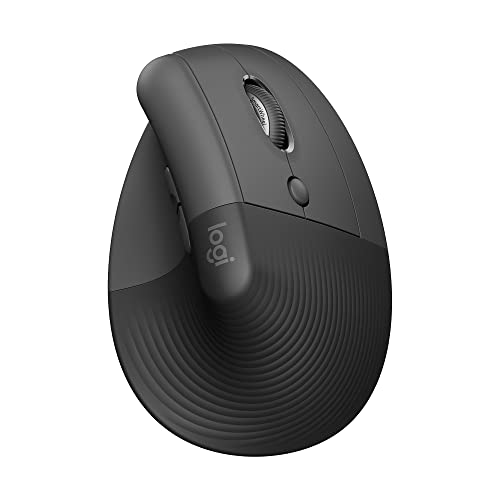
Logitech Lift Vertical Ergonomic Mouse
A 57-degree vertical mouse sized for small to medium right hands, with a soft-touch grip, thumb rest, quiet clicks, and Bluetooth or Logi Bolt connection — the gentlest entry into vertical mice.
Use a Wrist Rest the Right Way#
Wrist rests are widely misunderstood. A wrist rest is meant to support your wrists between keystrokes and bursts of mousing, not to be a pad you plant your wrists on and grind into while you type. If you pin your wrists down on any surface, hard or soft, and then type by reaching with your fingers, you create a pressure point and bend the wrist. That is the opposite of what you want.
Used correctly, the rest is a place to set your hands down during the small pauses, and it keeps the soft underside of your wrist off a hard desk edge. While you are actively typing, your wrists should float in that neutral line, with your hands moving over the keys. OSHA's guidance matches this: hands should move freely above the rest while typing, and when resting, the pad should contact the heel or palm of your hand rather than your wrist (OSHA). Look for a rest that matches the height of your keyboard so your wrists stay flat rather than propped up, and one firm enough to support without collapsing. We cover heights, materials, and shapes in our best wrist rests guide, and you can compare specific models in our wrist rest reviews.
A low-profile gel rest that sits close to keyboard height is a sensible default for most standard keyboards.

Kensington ErgoSoft Keyboard Wrist Rest
A 17.5-inch gel-cushioned keyboard wrist rest with a soft leatherette cover and a low 0.6-inch profile, sized for standard keyboards, with a non-skid base.
Take Micro-Breaks and Stretch#
Even a perfect setup will ache if you hold one position for hours without moving. Tissues do not love being static under low load all day. The fix is cheap: take a micro-break of 20 to 30 seconds every 20 to 30 minutes. Drop your hands to your lap, let your wrists go slack, shake them out gently, and roll your shoulders.
A few simple movements help between tasks. Make slow, easy fists and open your hands wide a few times. Gently turn your palms up and down. With your arm extended, use your other hand to apply a light, comfortable stretch to the wrist in both directions, holding a few seconds with no pain. Keep everything gentle. Stretching should feel like a release, never a strain, and you should never push into pain. Standing up and walking for a minute every half hour helps your whole body, wrists included.
When to See a Doctor#
Setup changes and breaks are supportive measures, not medical treatment. If you have numbness, tingling, or pain that wakes you at night, that does not improve after you fix your position, or that is getting worse over days, see a doctor or a physical therapist. The same goes for weakness, loss of grip, or symptoms in only one hand. These can point to issues that need a proper evaluation. Numbness or tingling in the thumb, index, and middle fingers, often worse at night, is a classic early sign of carpal tunnel syndrome (NINDS), and the earlier you get it checked, the simpler the path usually is. Nothing in this article is a diagnosis or a guaranteed fix, and no piece of gear is. Persistent symptoms deserve a professional opinion.
The Bottom Line#
Most desk-related wrist pain comes down to a few mechanical problems you can correct today: keep your wrists flat and neutral, set your keyboard and mouse at elbow height and close to your body, use a mouse that actually fits your hand, treat a wrist rest as support between keystrokes rather than a pad to type on, and break up long stretches with short pauses and gentle movement. Start with position and habits, since they cost nothing, then add the right wrist rest or ergonomic mouse if you need it. If symptoms persist or worsen, get them checked. Your wrists carry you through every workday, and they respond well to a setup that respects how they are built to move.