Choosing a footrest comes down to three things: the gap between your feet and the floor once your chair is set correctly for your desk, how much your legs need to move during the day, and how much floor space you actually have under the desk. Measure the gap, decide between a still platform and a moving one, and check the footprint, and you will avoid the two most common results of guessing: a rest that is too tall, or one that never fits under the desk.
Want our ranked shortlist? See the best footrests.
Our review page explains the main footrest types and the basic posture targets. This guide goes one step further: exactly how to take the measurements, how to read height and tilt specs, and the setup mistakes that turn a footrest into another source of discomfort.
What to Measure Before You Buy#
Set the chair first#
A footrest fills the gap your chair setup leaves behind, so the chair has to be right before you measure anything. Raise or lower the seat until your forearms sit roughly level with the desk surface and your shoulders are relaxed while you type. That is your working seat height. Do not lower the chair to reach the floor; that just moves the strain to your shoulders and wrists.
The heel gap#
With the chair at working height, sit back against the backrest and let your feet hang naturally. Measure from your heels to the floor, wearing whatever you normally wear at your desk. That number is the platform height you need, give or take an inch. If it is under about 2 inches, you may not need a footrest at all. If it is between 2 and 7 inches, most footrests can cover it. If it is larger, look at the tallest adjustable models or a stool.
Under-desk floor space#
Look under the desk before you shop. Desk legs, a crossbar, a computer tower, a filing cabinet, or a treadmill can all eat into the space. Measure the clear width and depth at floor level, and remember that your chair base and casters need room to roll in and out. Rocking and tilting platforms also need a little clearance to move without hitting anything.
Your floor surface#
Hard floors and carpet behave differently. On hardwood, tile, or a chair mat, a lightweight rest can slide every time you push off it, so look for rubber feet or a grippy base. On thick carpet, narrow feet can sink and rock, so a broad, flat base is more stable.
The Decision Axes and Trade-offs#
Fixed, stepped, or continuously adjustable height#
A fixed-height rest is the simplest option and works well if its height happens to match your heel gap. Stepped designs give you a few set positions: the TranquilRelax stacks foam layers for 2, 4, or 6.7 inches, the HUANUO Adjustable Footrest offers 3.9, 5, and 6 inches, and the HUANUO Bamboo Footrest has four settings from 3.15 to 6.89 inches. More positions mean a better match, and they make the rest easier to share between people of different heights.
Still support or active movement#
A still platform holds your feet steady, which some people find better for focused work. Rocking and tilting platforms keep your ankles moving. The EUREKA Ergonomic Tilt Footrest tilts from 0 to 20 degrees, and the HUANUO Adjustable Footrest rocks plus or minus 20 degrees. Some foam rests split the difference: the Everlasting Comfort can sit stationary or flip into a gentle rocker. If you get restless or your legs feel heavy by afternoon, lean toward movement; if constant motion would distract you, stay still.
Soft or hard surface#
Foam cushions your feet and is warmer and quieter, especially if you take your shoes off. Hard surfaces, such as bamboo, wood, metal, and plastic, are firmer, often add massage textures or rollers, and usually tilt more freely. Foam can compress over time, so high-density foam matters; hard surfaces do not compress but feel firm without shoes.
Footrest or stool#
A low rolling stool, like the EUREKA Multi-Use Rolling Stool, can serve as a footrest, a perch, or an extra seat. It is more versatile, but larger and taller than a typical footrest. It makes sense if your heel gap is large or you want one piece of furniture to do several jobs.
Budget Tiers: What You Gain as You Move Up#
Budget. Fixed-height foam wedges and simple plastic tilting rests. You gain the core fix: supported feet and less pressure under the thighs. You give up height choice, and cheaper foam can flatten with daily use.
Mid-range. Adjustable-height foam rests, multi-height tilting platforms, and bamboo designs. You gain a closer height match, tilt or rocking, massage textures, and washable covers on foam models. This tier suits most people.
Premium. Designed rockers built from wood and die-cast aluminum, and multi-use rolling stools. You gain build quality, long warranties, and either a refined rocking motion or a piece that works as seating too. You pay for materials and versatility rather than a better posture fix.
Common Mistakes#
Buying a footrest that is too tall. If your knees rise above your hips, your weight shifts back onto your tailbone and the front of your thighs lifts off the seat entirely. Aim for knees roughly level with or just below your hips.
Lowering the chair to suit the footrest. The chair is set for the desk; the footrest serves the chair. If your desk is height-adjustable, lowering the desk and chair together may remove the need for a footrest.
Ignoring under-desk obstacles. A rest that collides with a desk crossbar or computer tower ends up pushed to one side, where you cannot use it properly.
Expecting an unlocked tilt to stay put. Free-tilting platforms move whenever you shift your feet. The EUREKA tilt rest notes that its tilt has no lock. If you want a fixed angle, choose a rest that locks or a foam wedge.
Choosing low-density foam for daily use. Soft foam sinks and flattens, so the height you bought is not the height you get after a few months. Look for high-density foam, like the Everlasting Comfort and TranquilRelax use.
Skipping a washable cover. If you take your shoes off at the desk, a removable, machine-washable cover keeps a foam rest fresh.
Picks by Need#
For a simple, budget-friendly fix. The Everlasting Comfort Foot Rest is a high-density memory foam teardrop that works stationary or as a gentle rocker, with a machine-washable cover. It suits a heel gap that matches its single fixed height.

Everlasting Comfort Foot Rest
Best ValueOne of the most popular footrests — premium high-density memory foam with dual stationary or rocking modes, an ergonomic teardrop shape, and a machine-washable removable cover.
For matching your exact height. The TranquilRelax Modular Foot Rest stacks high-density foam layers to 2, 4, or 6.7 inches, with a non-slip base and a washable zippered cover. It is for anyone whose heel gap falls between standard sizes, or for a desk shared by different people.

TranquilRelax Modular Foot Rest
A three-layer modular foam footrest with 3 adjustable heights (2", 4", or 6.7"), high-density foam that won't sink, a non-slip bottom, and a machine-washable zippered cover.
For adjustable height plus movement. The HUANUO Adjustable Footrest offers 3.9, 5, and 6 inch heights, rocks plus or minus 20 degrees, and has a massage-textured surface with rollers. It suits people who want both a good height match and something to keep their feet moving.

HUANUO Adjustable Footrest (Tilt + Roller)
An adjustable under-desk footrest with 3 height settings (3.9", 5", 6"), ±20° tilt for smooth rocking, a massage-textured surface with rollers, and a pre-assembled design — out of the box and ready to use.
For a premium rocking platform. The Humanscale FM500C Foot Machine is solid wood and die-cast aluminum with non-skid rubber grips, built around a rocking motion, and backed by a lifetime warranty. Choose it if you want a durable hard-surface rocker and do not need foam cushioning.
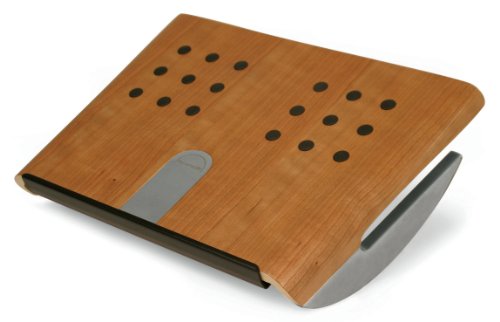
Humanscale FM500C Foot Machine
Editor’s ChoiceAn award-winning, minimalist footrest in solid wood and die-cast aluminum that encourages a healthy rocking motion to boost circulation — backed by a lifetime warranty and non-skid rubber grips.
For a large heel gap or mixed use. The EUREKA Multi-Use Rolling Stool adjusts from 16.75 to 20.25 inches, swivels and rolls, and has a 250-pound capacity. It is for people who want a footrest, perch, and spare seat in one, and who have the floor space.
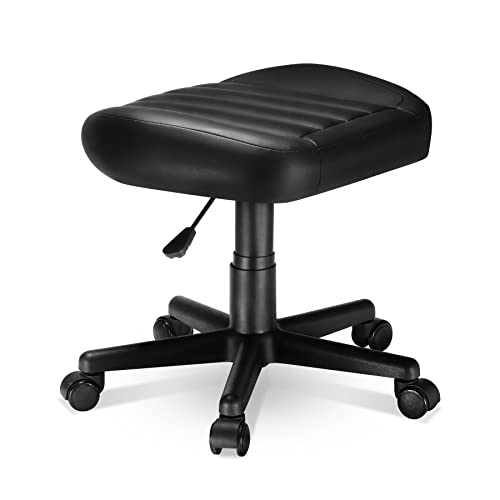
EUREKA Ergonomic Multi-Use Rolling Stool
A height-adjustable (16¾"–20¼") swivel rolling ottoman that doubles as a footrest, gaming stool, or guest chair — PU leather, BIFMA/SGS-rated gas lift, and a 250 lb capacity. The most versatile footrest here.
FAQ#
Do short people need a footrest at a standard desk?#
Often, yes. Standard desks sit around 28 to 30 inches high, which is set for average-height users. Shorter people have to raise the chair to type comfortably, which lifts their feet off the floor. Measure the heel gap with the chair at working height: if it is more than about 2 inches, a footrest will help.
Should you use a footrest with shoes on or off?#
Either works, but measure the way you actually sit. Shoes add height, so a rest measured with shoes on can feel too low barefoot. Foam surfaces and soft covers feel better without shoes, while hard massage surfaces and rollers can feel intense barefoot. Stepped or adjustable designs make it easy to switch.
Can you use a footrest at a standing desk?#
A low seated footrest is mostly useful during the sitting part of the day. When you stand, the useful move is to rest one foot on something slightly raised and switch sides, which shifts your weight and eases the static load. A stool, a low perch, or a sturdy tilting footrest can do that job, so a sit-stand user may get more from one versatile piece than a dedicated foam wedge.
How do I stop my footrest from sliding?#
Start with the base: rubber feet and textured non-slip undersides grip hard floors far better than bare plastic or fabric. On a smooth floor or chair mat, add a small rubber mat underneath. Also check the height, since a rest that is too low makes you push forward against it, which drives it away from the chair.
When you are ready to compare specific models, see our ranked list of the best footrests.